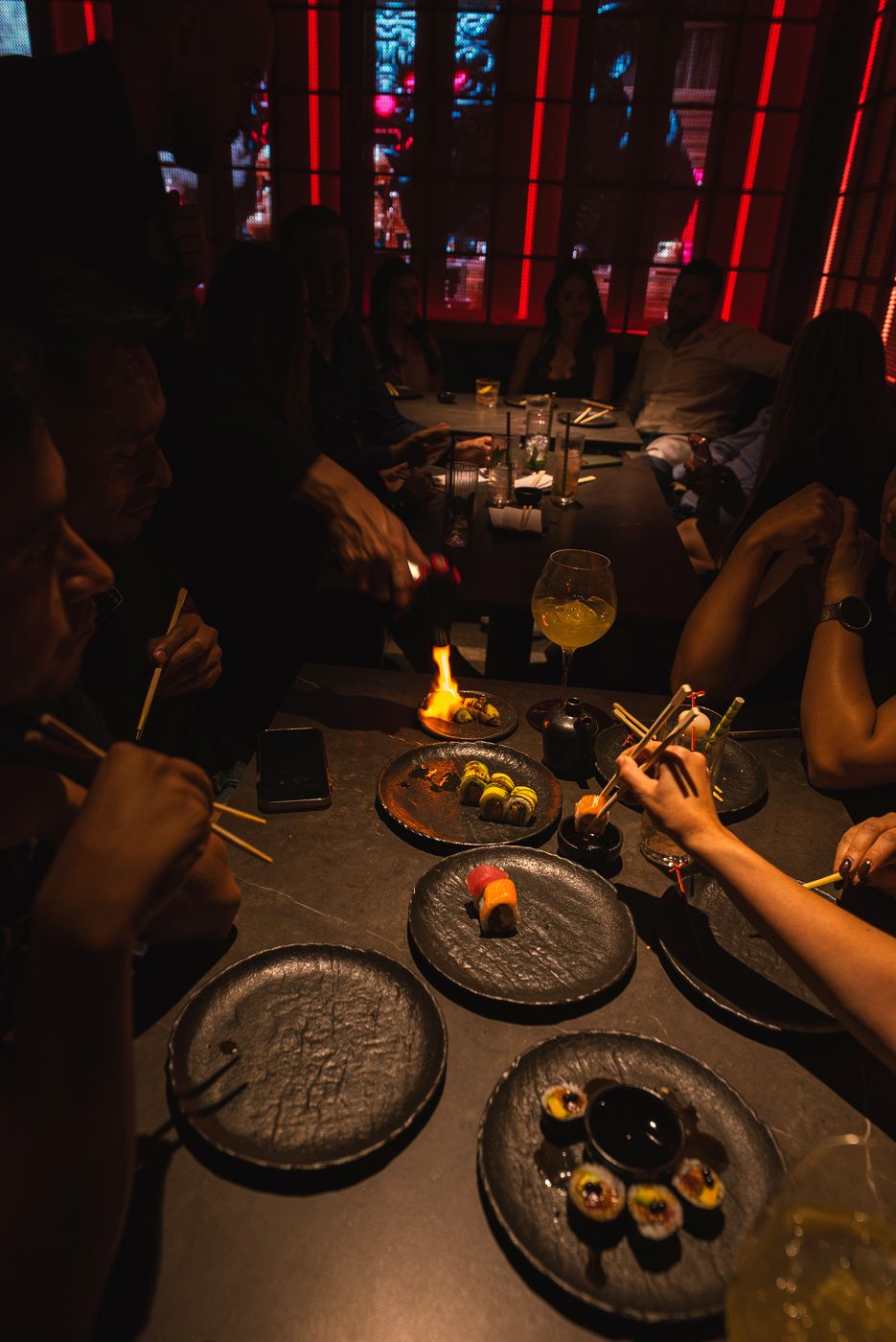
Sushi has a solemn reputation, but its rules are few and they all share one reason: letting the fish taste like itself. Nobody will tell you off at the table. They are still worth knowing.
Fingers are fine
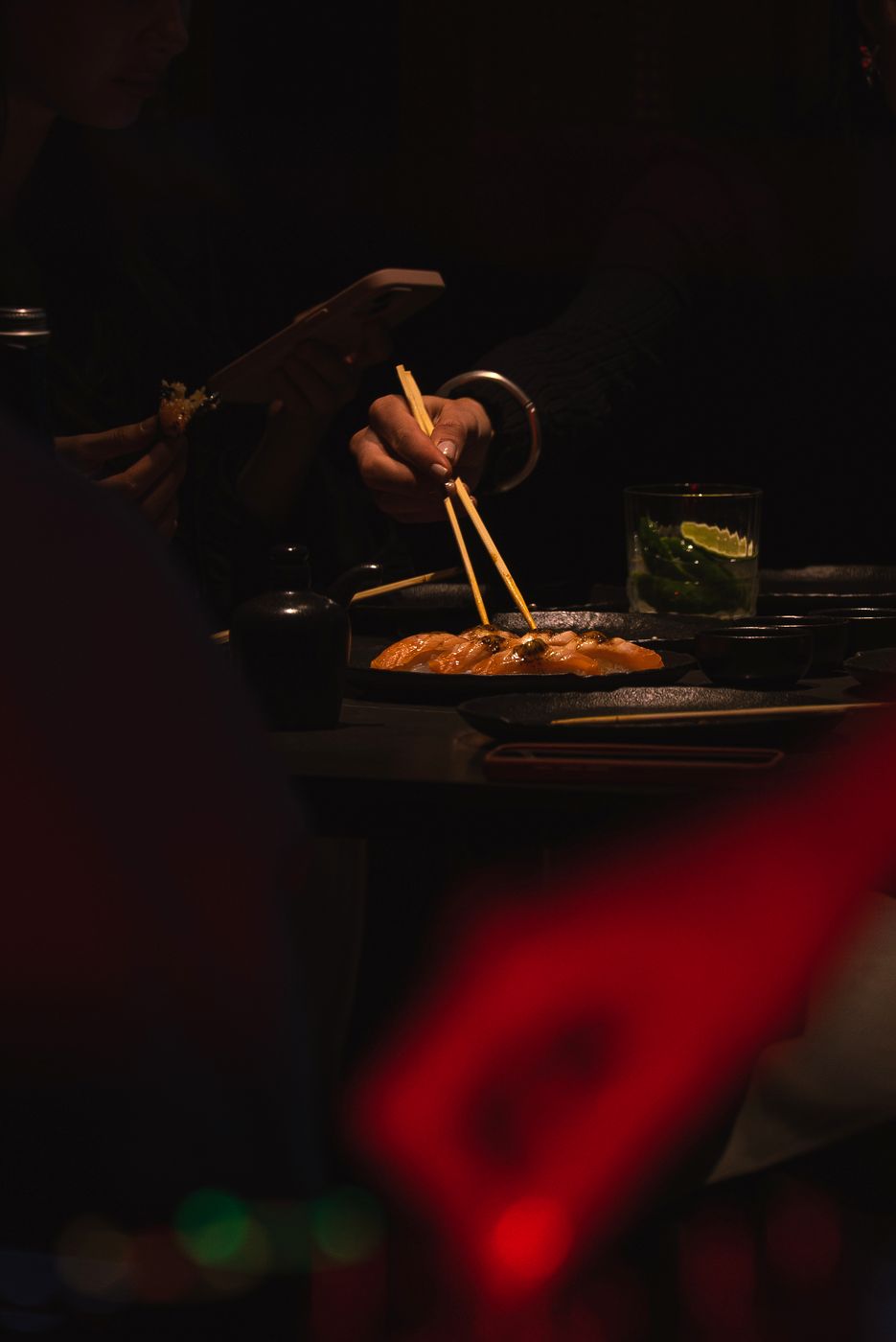
Nigiri began as street food in Edo, the Tokyo of the 19th century, and it was eaten by hand. It still can be. Chopsticks are for sashimi and for anyone who prefers them. Rolls work either way.
Soy on the fish side
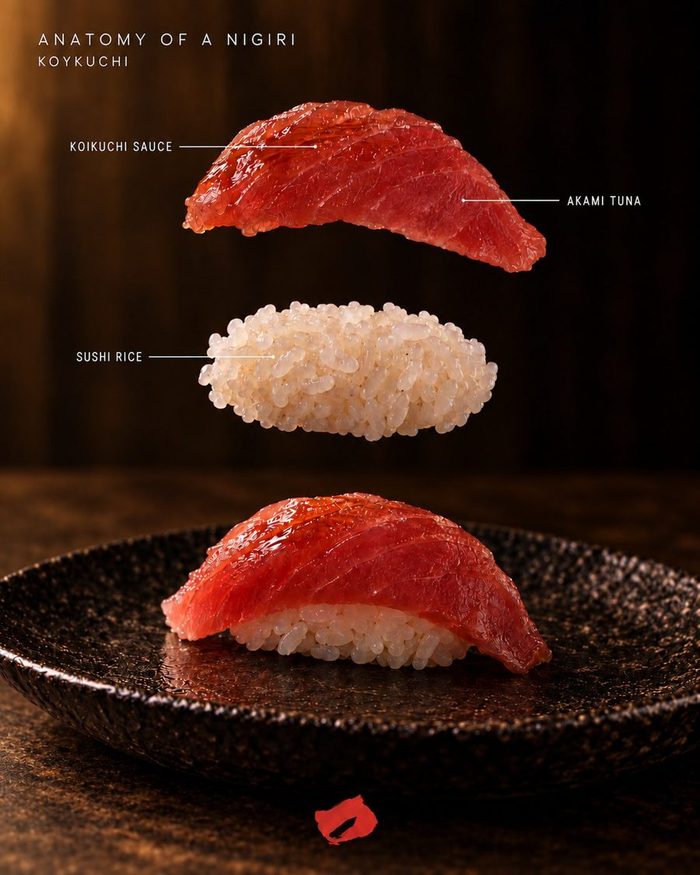
Rice is a sponge: if it touches the soy, it drinks it all and falls apart. Turn the nigiri over and dip only the fish. With a roll, one corner is enough. And if the piece arrives already brushed with sauce, it needs nothing else.
Soy goes with the fish. It doesn't cover it.
Wasabi doesn't go in the soy
Stirring wasabi into soy is a habit from this side of the world. At a traditional counter, whoever makes the piece has already added the wasabi it needs, between the rice and the fish. If you want more, put a little straight on the fish.
Ginger is a pause
Pickled ginger, gari, doesn't go on top of the sushi. You eat it between one piece and the next, to clear your palate so the next fish starts from zero.
In one bite
Each piece is built to be eaten whole: rice, fish and air in the right proportion. Biting it in half undoes it. Hosomaki, small and slim, is the best example.
The order
From mild to intense. White fish first, then salmon and tuna, and the rich and the sweet at the end, like eel.
Three things chopsticks don't do
Don't stand them upright in rice and don't pass food from chopsticks to chopsticks: both gestures belong to funerals in Japan. Don't rub them together either, because it suggests they are cheap.
At ONO
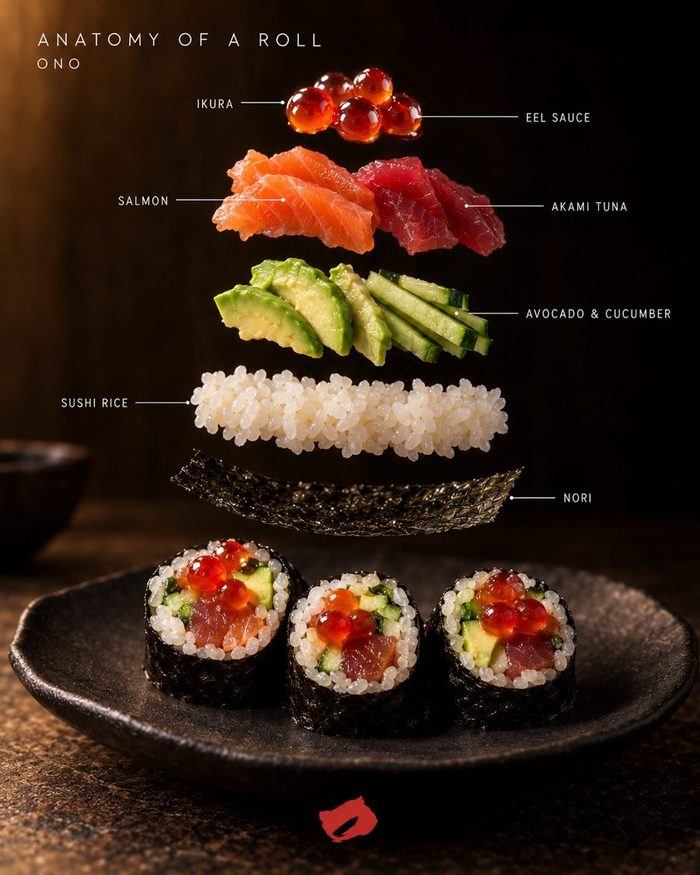
On the menu you can see the anatomy of each roll and know what's in it before you dip. Read what is hosomaki, go over the difference between nigiri, sashimi, maki and temaki and book your table at Calle 84A #9-11.