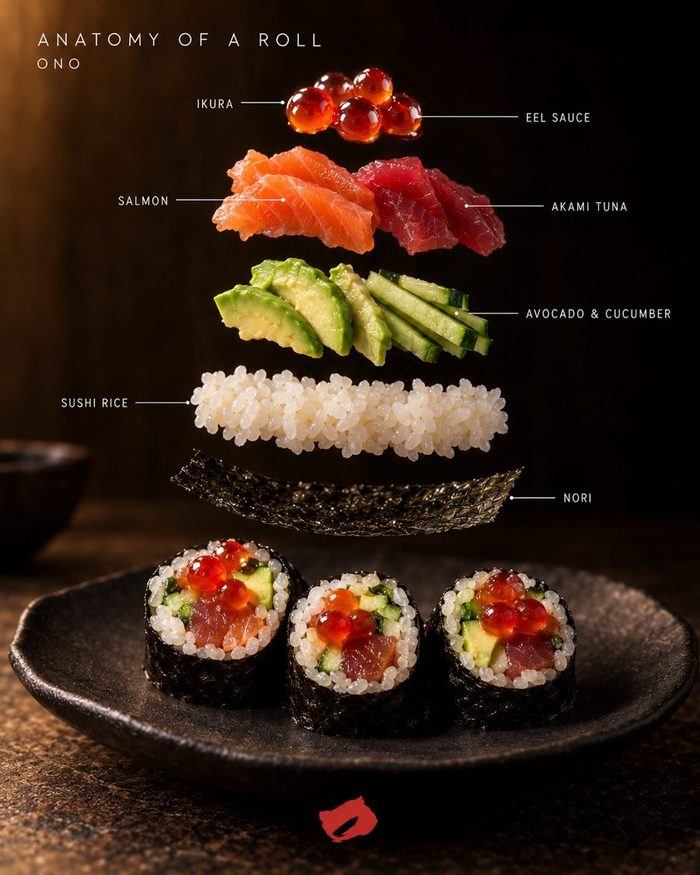
First, the faint crunch of nori. Then the rice, still warm and barely sour, and in the middle one single flavour, no distractions. It goes in one bite. In the world of sushi, hosomaki is the most classic roll: a thin cylinder with nori on the outside, rice inside and, usually, one ingredient in the middle. "Hoso" means thin and "maki" means rolled.
A roll born from paper
Hosomaki owes its life to an unexpected trade: papermaking. During the Edo period, in Asakusa, in what is now Tokyo, seaweed began to be pressed and dried into sheets using papermakers' techniques, and the nori sheet was born. With it, rolling rice and filling became a habit of ordinary people: hand food, fast, to eat anywhere.
The names of the rolls keep their own mythology. Kappamaki, with cucumber, is named after the kappa, a creature of Japanese folklore that lives in rivers and ponds and, legend says, loves cucumbers. Tekkamaki, with tuna, is said to be named after the tekkaba, the gambling houses where people ate with one hand while betting with the other.
Hosomaki, uramaki and futomaki
Hosomaki is thin, nori outside, one ingredient. Uramaki is the "inside-out" roll, rice outside and nori inside. Futomaki is thick, with several ingredients in the middle. All three come off the same bamboo mat, but hosomaki is the unforgiving one: with a single star, everything depends on the fish, the cut and the rice.
With a single star, there's nowhere to hide.
Why ONO is a hosomaki bar
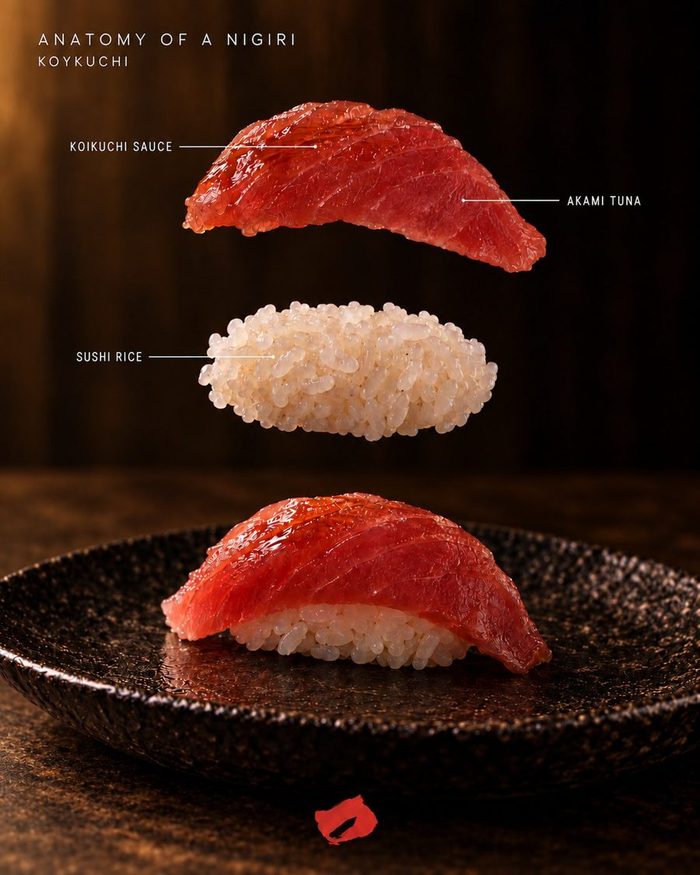
ONO takes its name and its idea from that roll: precision, few elements and no extra filler. The menu pairs classic hosomaki with house rolls like the Kaori roll and the Sakana umami, and on ONO's home page you can see the anatomy of each roll, layer by layer.
To try them, ONO is at Calle 84A #9-11, Bogotá, Tuesday to Saturday from 7 pm. Read our guide to sushi in Bogotá, too.