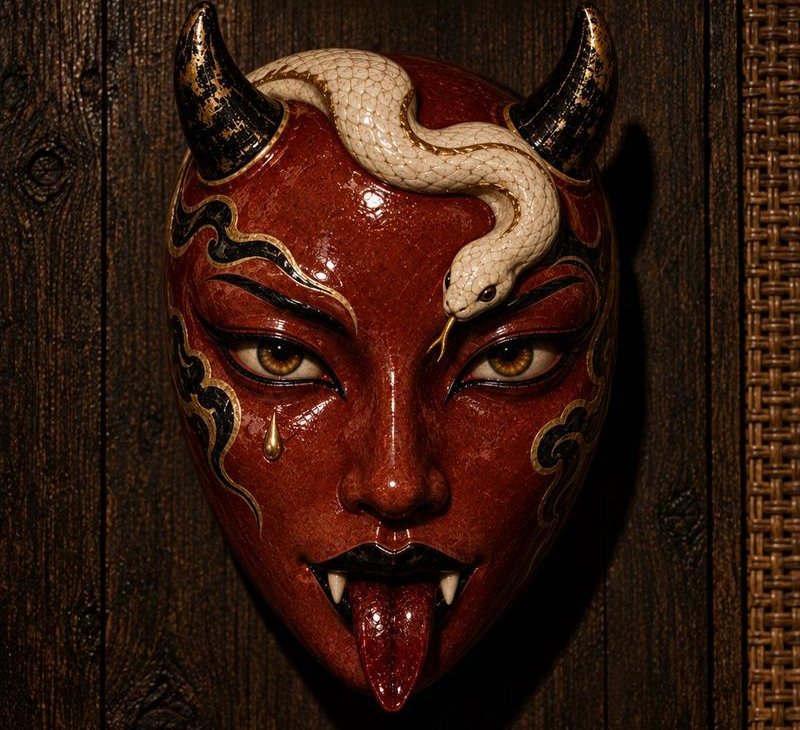
If you've been to ONO, you've seen it: a red mask with horns and fangs, watching you from a wall, a stamp or a screen. It's an Oni, and it isn't there to scare you. It's there to ask you a question: what face do you keep for the night?
What is an Oni
In Japanese folklore, the Oni are creatures somewhere between ogre and demon: horns on the forehead, red or blue skin, fangs and, often, an iron club in hand. They appear in folk tales, in theatre and in popular festivals. They're fearsome, but they're also part of everyday life: Japanese households chase them out once a year and draw them fondly the rest of the time.
Setsubun: out with the Oni
In early February, at Setsubun, which marks the turn from winter to spring, many families in Japan throw roasted soybeans out the door shouting "Oni wa soto, fuku wa uchi": out with the Oni, in with good luck. Someone in the house wears an Oni mask and the others chase them, laughing. It's a cleansing ritual, and also a game.
Everyone has an Oni. The question is when you let it out.
Why ONO chose the Oni
ONO is inspired by the Oni because they stand for human duality: light and shadow, chaos and order. By day you're one person; at night, another. That's why our campaign is called Unmask your Oni: it isn't about putting a mask on, but about taking it off. The red version carries a white snake; the green one, koi fish. Each is a different take on the same idea.
Where to see it
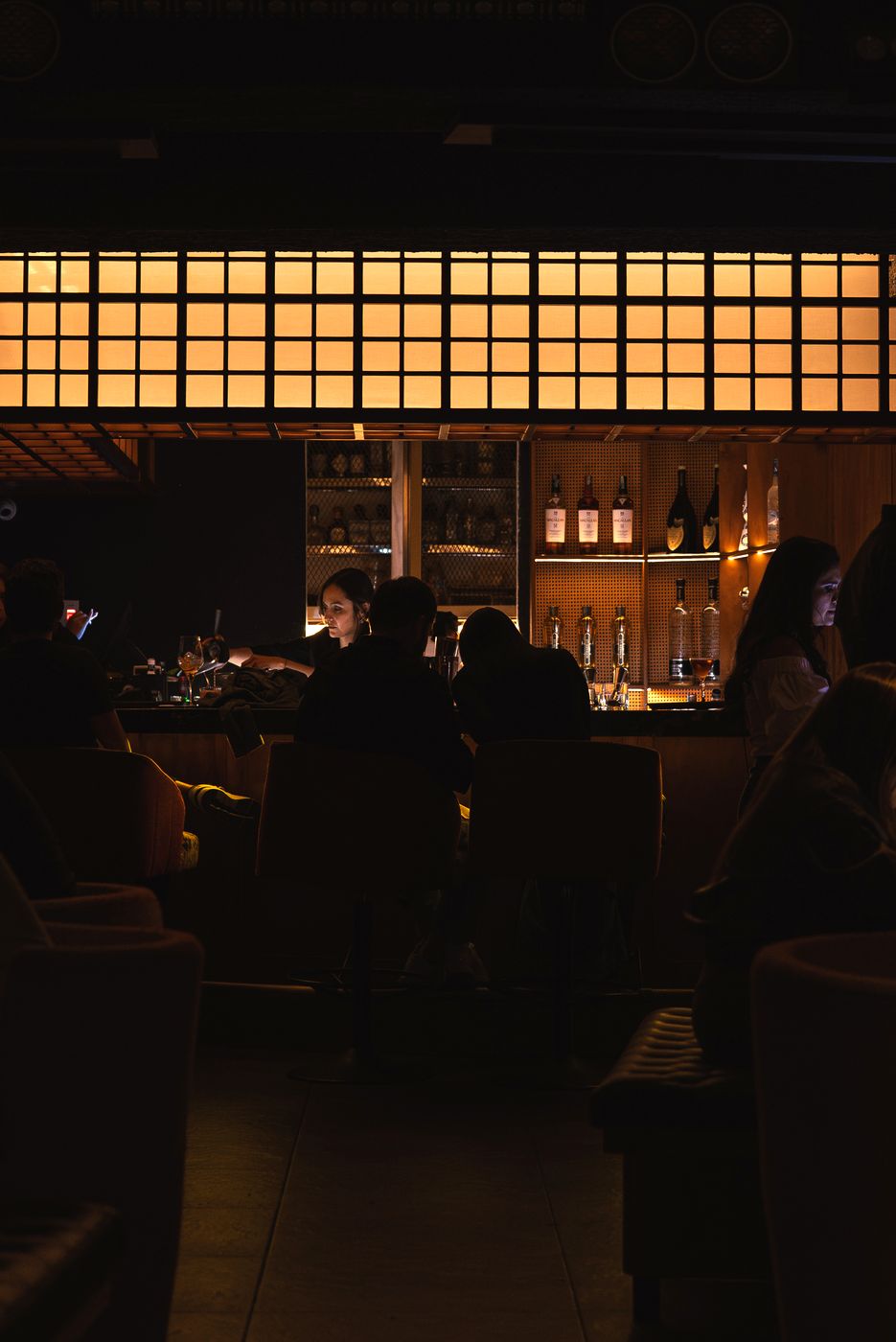
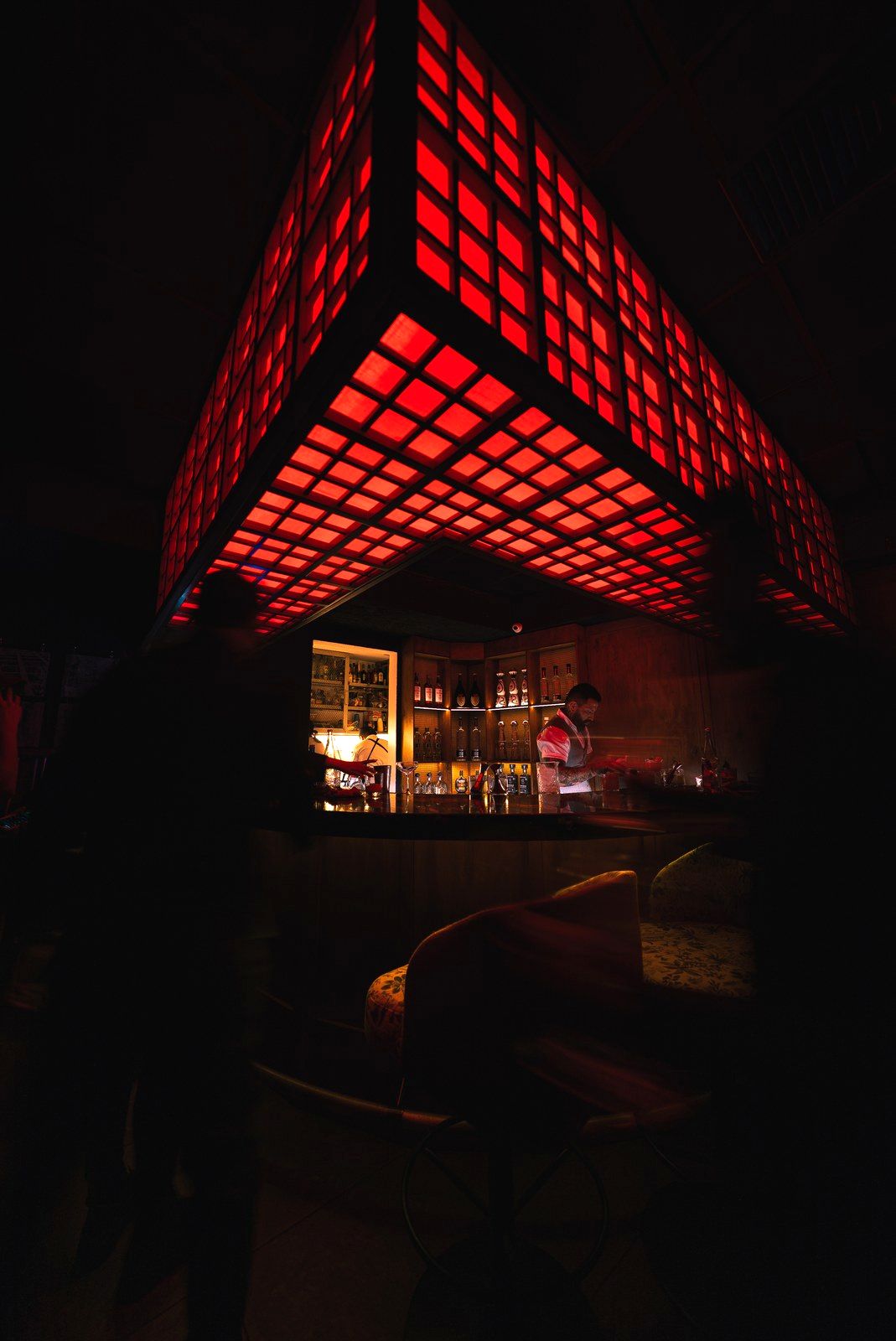
The Oni mask is in ONO's gallery, in the art of the house and in every night, when at 11 pm the lights drop and the music rises. Read the full story in Tokyo spirit, Bogotá soul, or come and see it: ONO is at Calle 84A #9-11, Bogotá, Tuesday to Saturday from 7 pm, and you can book your table online.