Many people call it rice wine, but sake is closer to beer in how it's made and to nothing else in how it tastes. It's Japan's traditional drink and, alongside the food, one of the best ways to understand why precision matters so much there.
How it's made
Sake is made from four ingredients: rice, water, yeast and koji, a mould that turns the rice's starch into sugar so the yeast can ferment it. Before it starts, the rice is polished to remove its outer layer. The more it's polished, the cleaner and more aromatic the sake tends to be.
Junmai, ginjo, daiginjo
The labels mostly talk about that polishing. Junmai means "pure rice": sake made only from rice, water, koji and yeast, with no added alcohol. Ginjo is sake from rice polished to keep at most 60% of the grain, fruitier and lighter. Daiginjo goes further, at 50% or less, and is usually the most delicate. If it says junmai ginjo or junmai daiginjo, it's both.
The more polished the rice, the finer the sake.
Cold or warm?
The finest sakes, like ginjo and daiginjo, are served cold so they keep their aroma. Others, sturdier, are enjoyed warm or hot, a custom with its own name in Japan: atsukan. There's no single rule; it's best to ask at the bar.
Sake and sushi
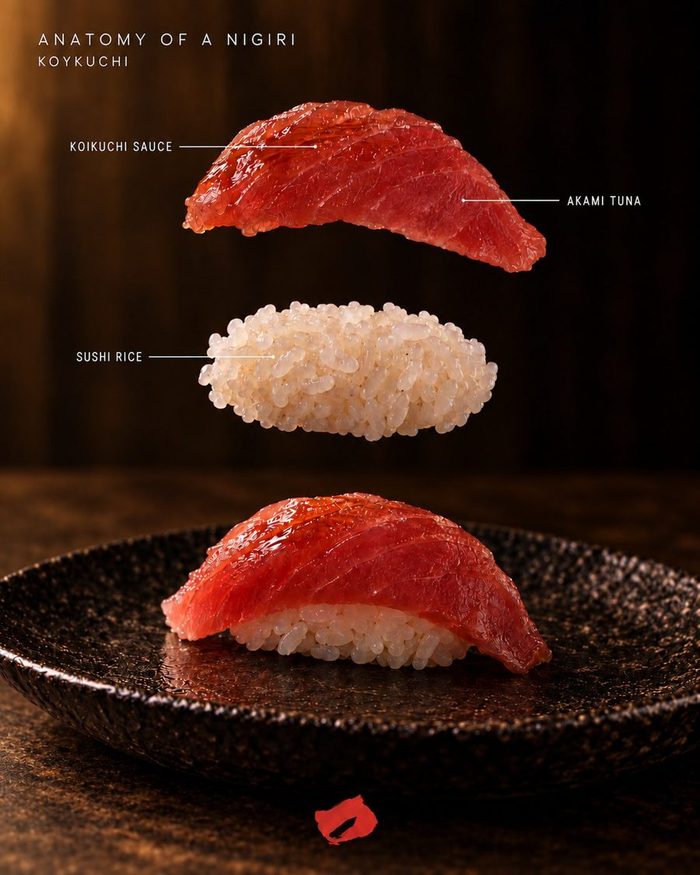
Sake and sushi grew up together. A clean, cold sake goes well with raw fish and vinegared rice, and a bolder one stands up to sauces like eel. At ONO there's sake and signature cocktails to go with dinner; read our guide to sushi in Bogotá and book your table at Calle 84A #9-11.